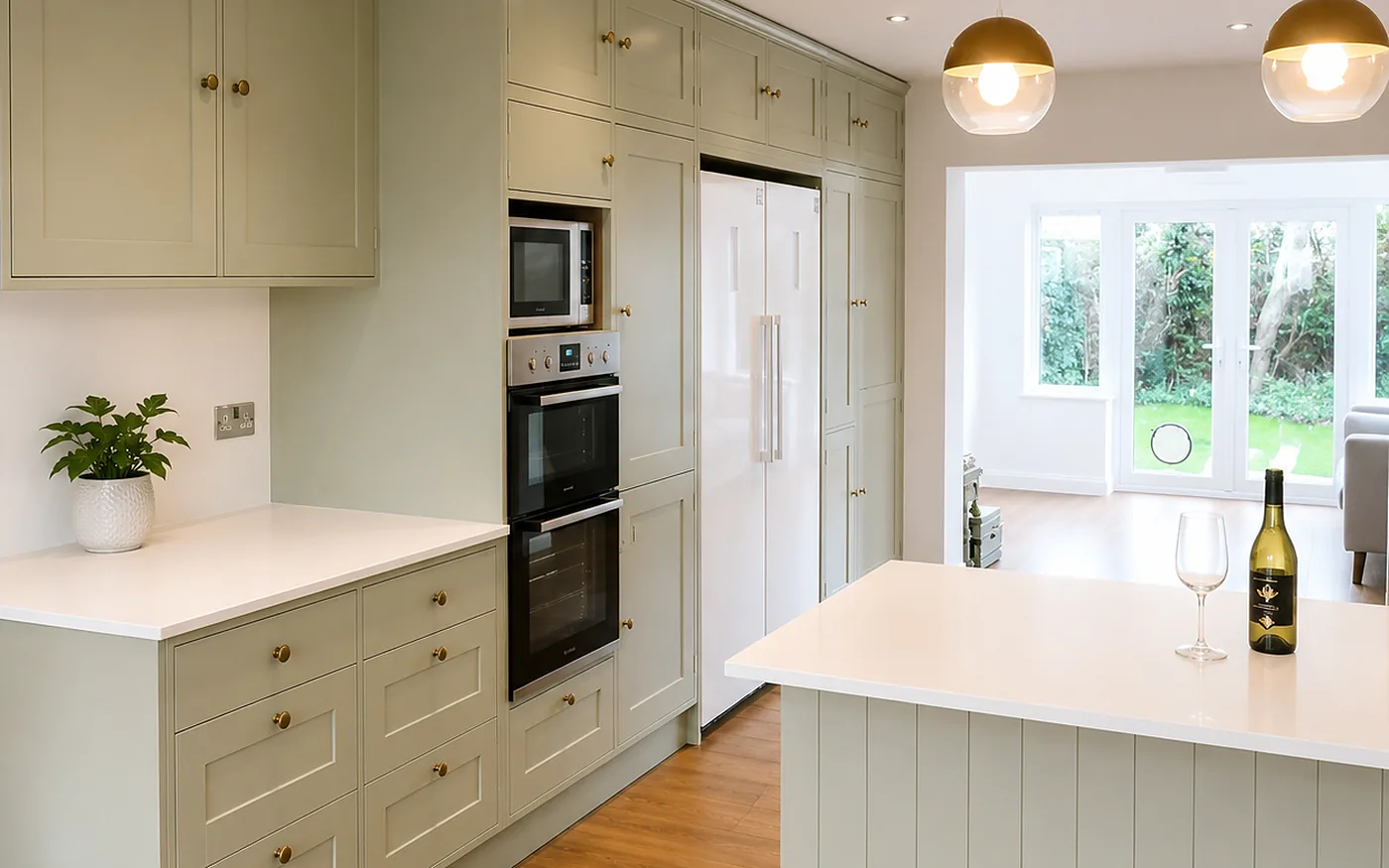
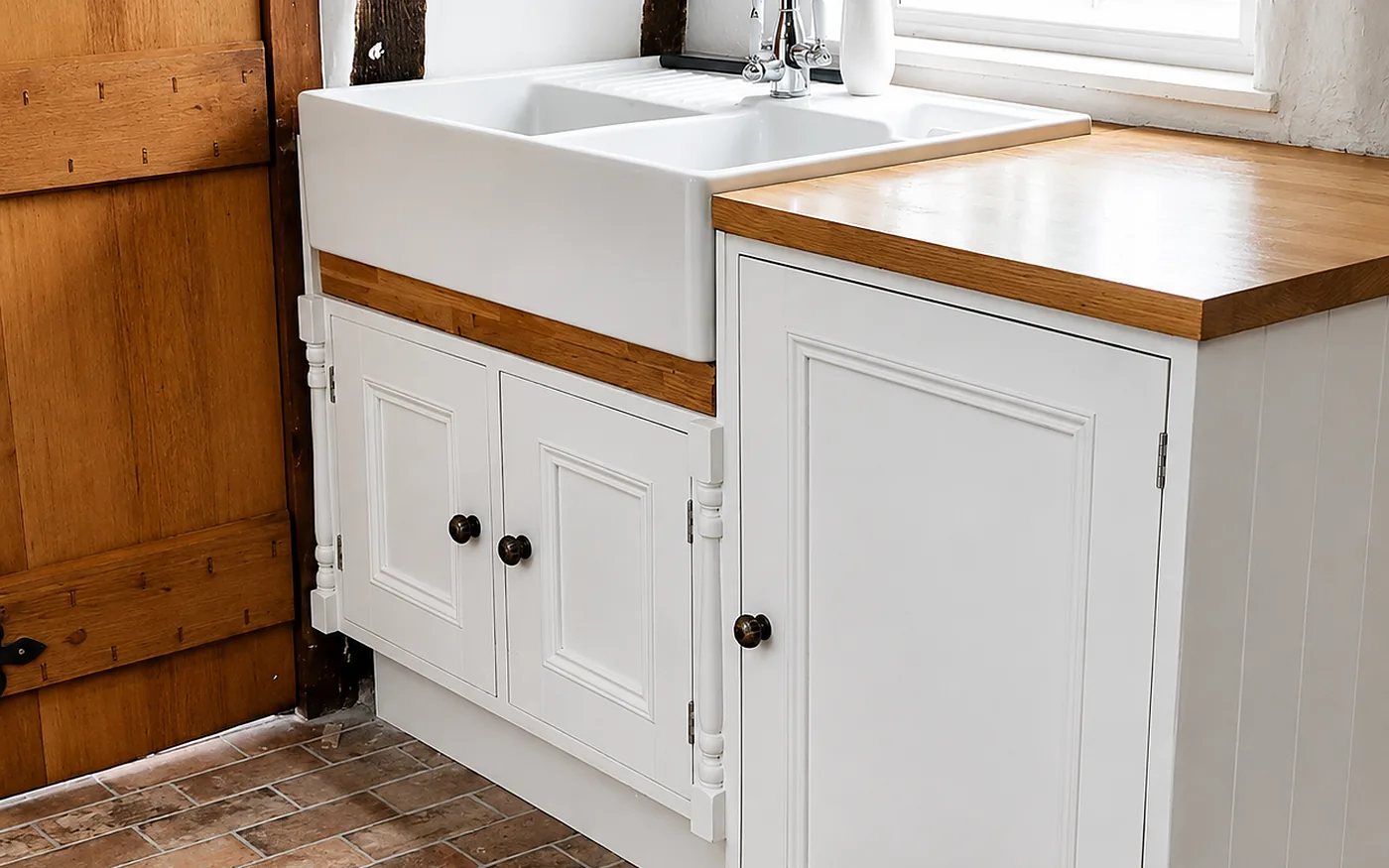
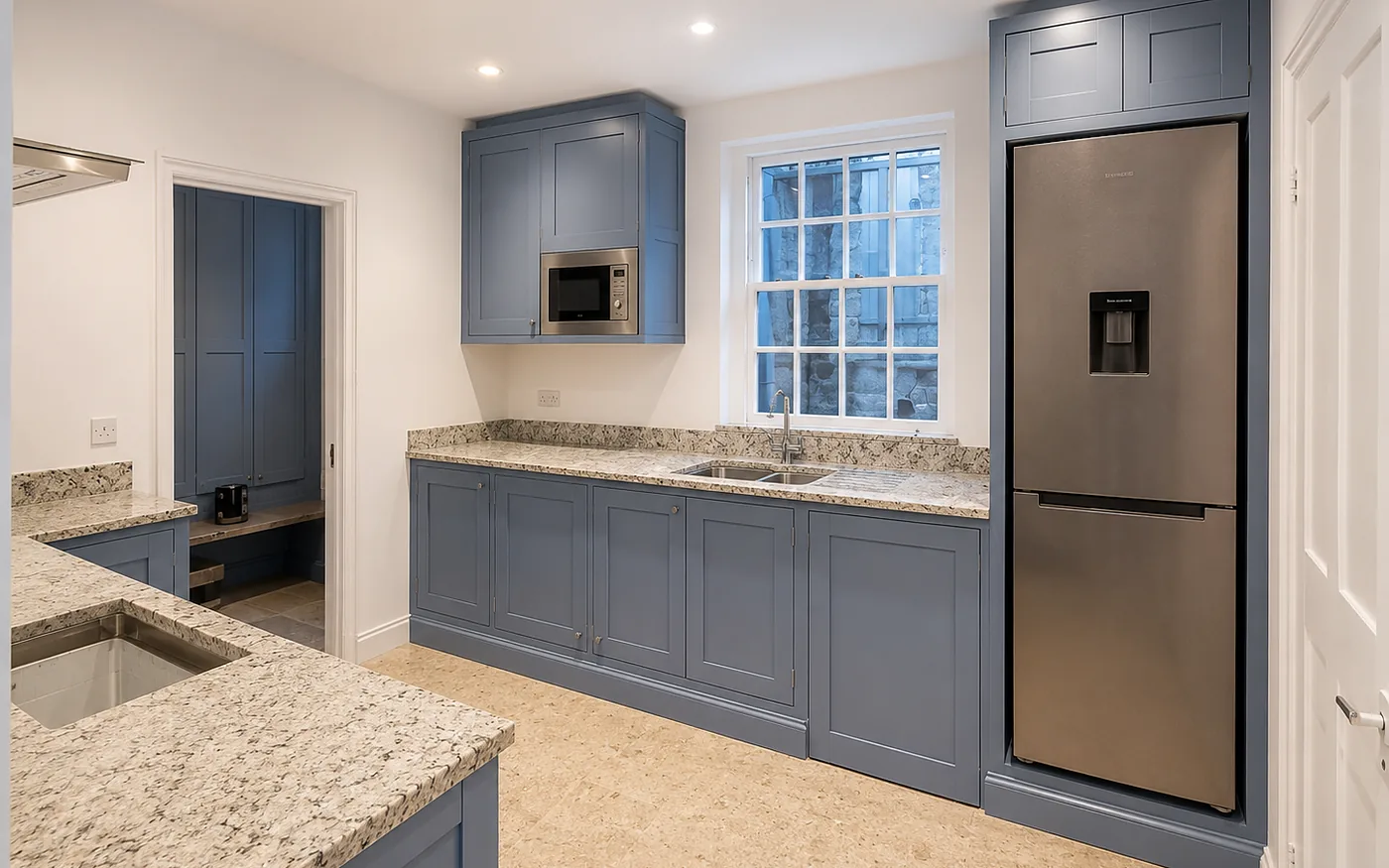
Beaded in-frame doors
A bead run around the inside edge of the face frame — the detail that separates a genuine period kitchen from a modern one with mouldings stuck on.
Traditional
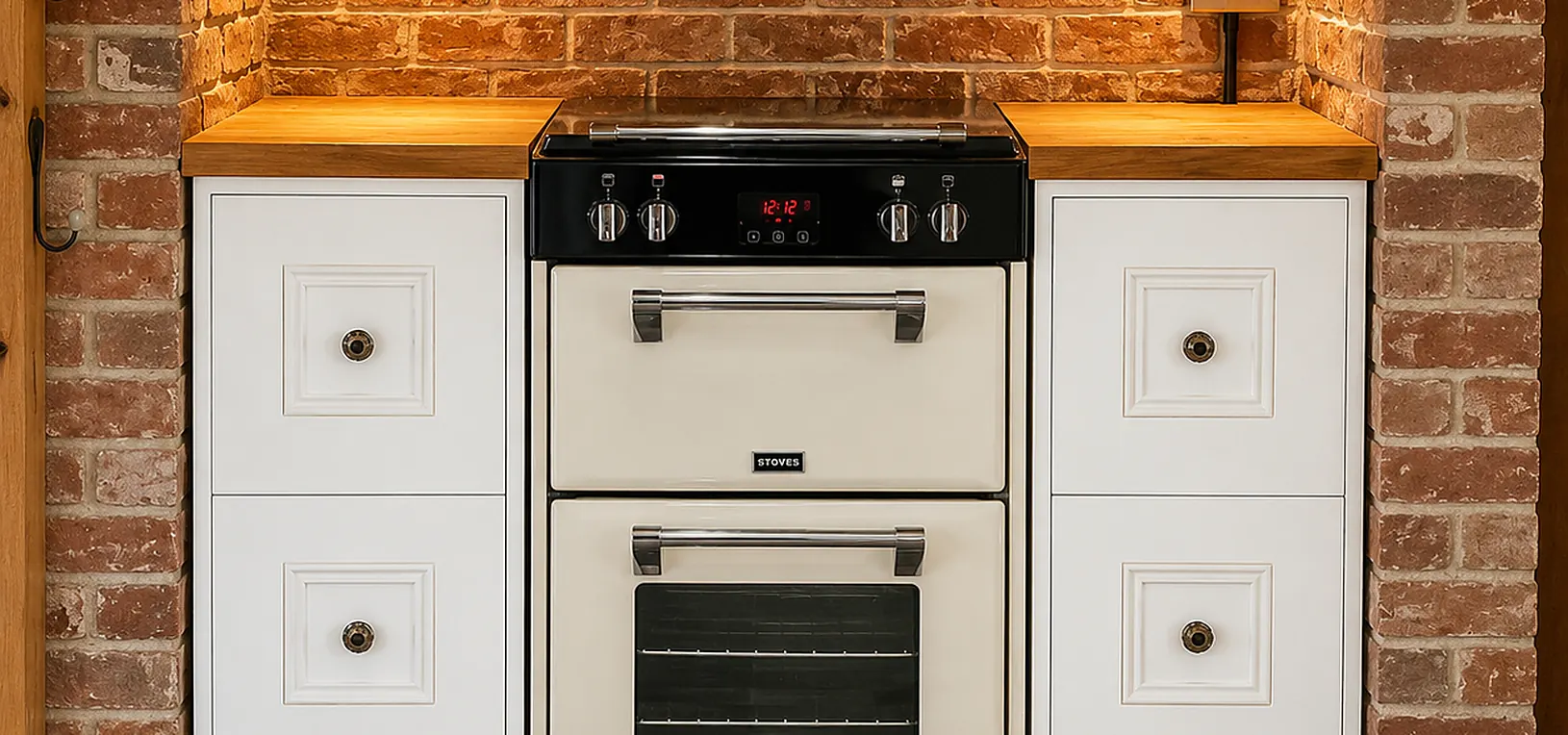
Beaded in-frame doors, a proper cornice, a butler sink under a window and a recess built around the range. Made in solid tulipwood and painted by hand.
Traditional
A traditional kitchen lives or dies on proportion. Get the stile widths, rail heights and cornice depth right and the room looks as though the kitchen has always been there. Get them wrong — a fashionable slab door with an applied moulding, a cornice too shallow for the ceiling height — and it reads as a modern kitchen wearing a costume.
Because every component is made rather than ordered, proportions are set to your room rather than to a manufacturer's standard. In a Victorian terrace with three-metre ceilings, tall units and cornice can be scaled up so the run does not look stranded. In a low Sussex cottage, the same design gets shallower rails and a slimmer cornice so it does not crowd the space.
The details that matter most are the ones people notice without being able to name: a bead run around the inside of the frame rather than applied to the door, drawer fronts that align with door rails across the whole run, a plinth that follows a floor which is nowhere near level, and shadow gaps of three millimetres all the way round rather than five in some places and one in others.
Detail
A bead run around the inside edge of the face frame — the detail that separates a genuine period kitchen from a modern one with mouldings stuck on.
The old chimney opening rebuilt as a proper recess with a timber mantel above, so the cooker sits in the wall rather than in front of it.
Deep fireclay sinks set into oak with hand-cut drainer grooves, usually under the window where they belong.
Full-height painted larders with oak shelving, spice racks in the door and a marble cold shelf if you want one.
Open racks over the sink, glazed dresser tops, and freestanding-looking pieces built in so they cannot be knocked.
Scaled to your ceiling, mitred on site, and painted continuously with the wall so there is no visible break.
Worth knowing
The look is period. The engineering underneath is entirely modern, because nobody actually wants to live in 1890.
Full-extension under-mount runners and concealed soft-close hinges, hidden completely by the in-frame construction. The kitchen looks Victorian and behaves like it was made this year.
Deep pan drawers behind what appear to be cupboard doors, integrated bins, pull-out larders and appliance housings that hide a dishwasher behind a painted panel.
Brushed paint on a sound tulipwood-and-MDF substrate can be rubbed down and recoated in fifteen years. A foil-wrapped door cannot be repaired at all.
Straight answers
In-frame means the door sits inside the cabinet's face frame rather than over the front of it. Beaded in-frame adds a small moulded bead run around the inside edge of that frame, which casts a shadow line and gives the classic period look.
Beaded is more work — every bead is mitred at the corners — and is priced accordingly, but it is the detail most people are picturing when they say “traditional”.
Often, yes. A new-build with plain plasterwork can carry a simpler in-frame design with a shallow cornice very comfortably — it adds warmth and texture the architecture does not provide. What tends not to work is heavy beading and deep cornice in a room with a 2.3-metre ceiling. Ollie will say so at the design visit.
Yes. Skirting profiles, architrave, dado and picture rails can be matched by taking a template from the original and cutting a matching cutter profile, so the new kitchen ties into the rest of the house rather than sitting apart from it.
The paint itself costs more per litre than trade emulsion, but it is a small proportion of the total and the depth of colour is noticeably better. Ollie will quote using whatever brand you prefer and can show you the difference on sample doors before you commit.
Next step
Book a free, no-obligation design visit. Ollie measures up, talks through what you want and follows up with a drawing and a fixed written quote — usually within a week.