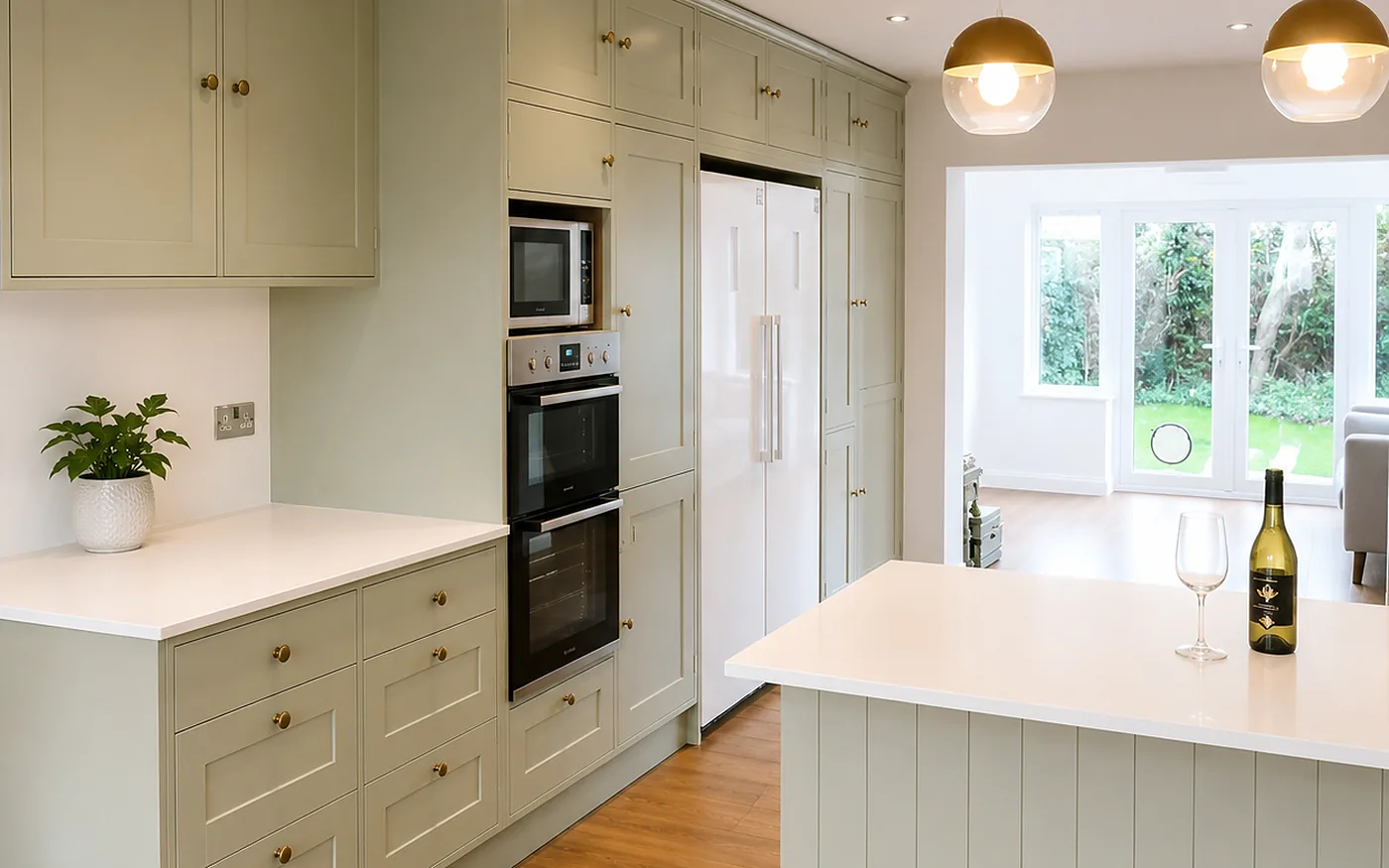
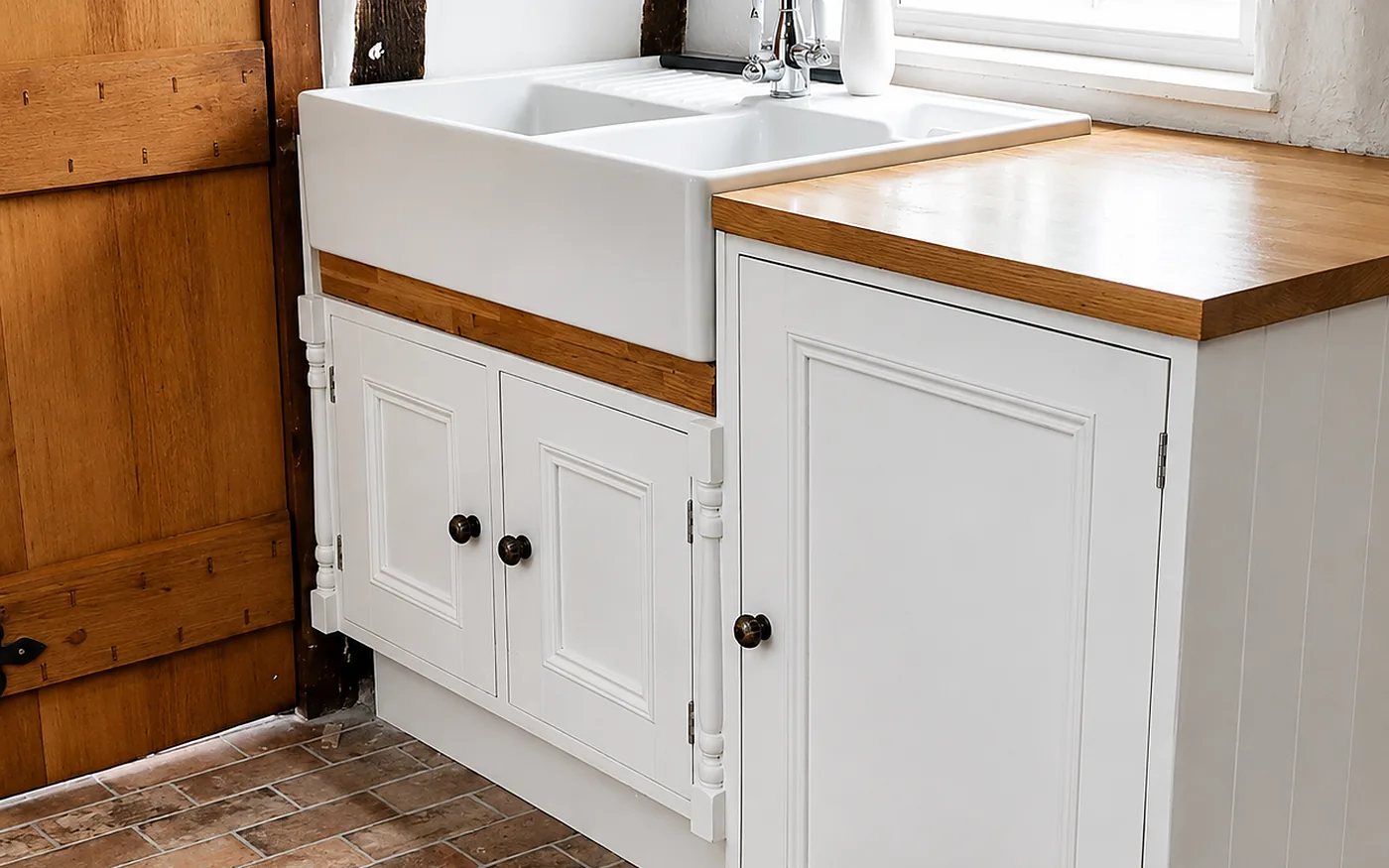
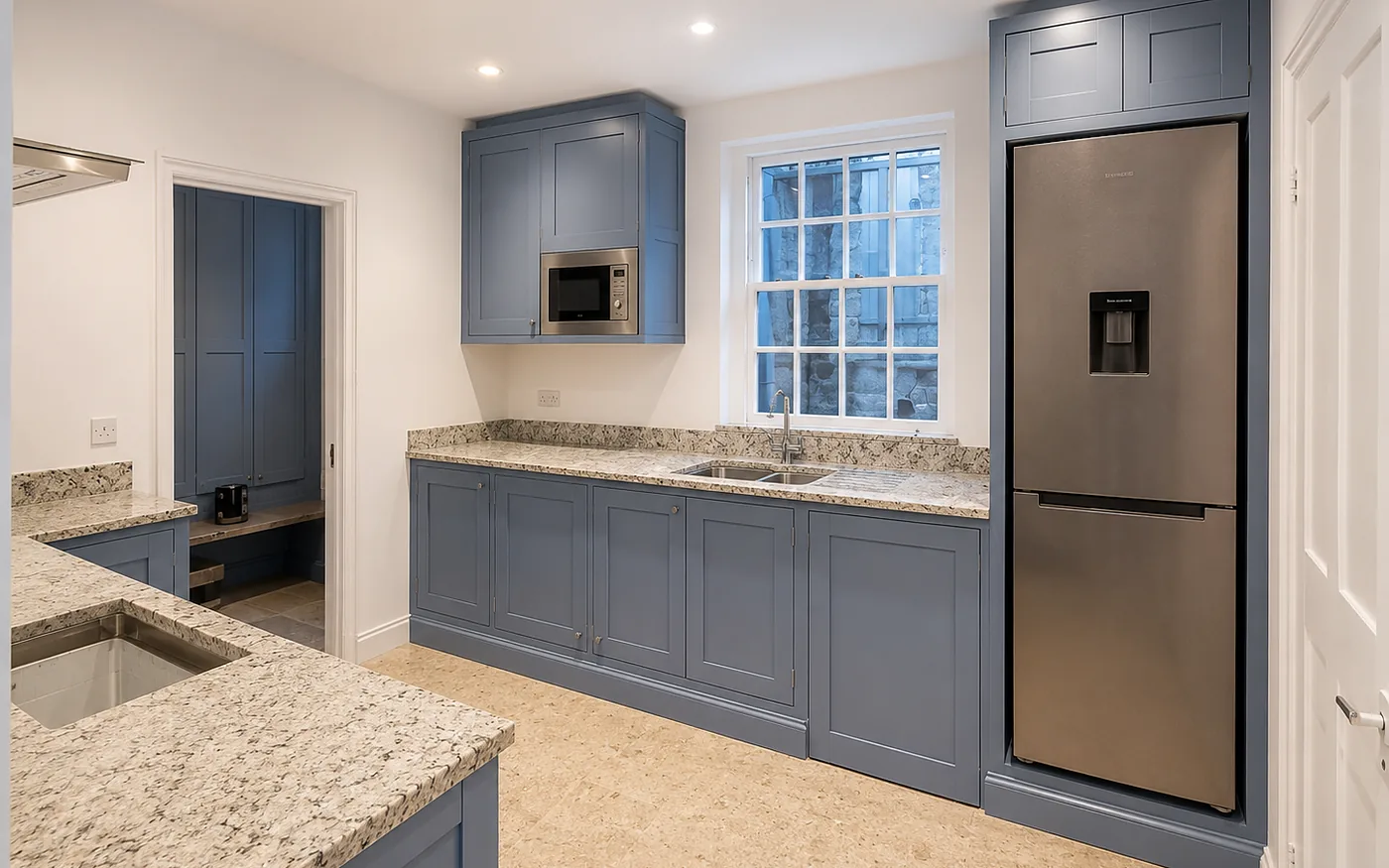
Stile width
The single biggest influence on how a shaker kitchen reads. Narrow stiles look contemporary and light; wide stiles look substantial and rural. Set per project, not per catalogue.
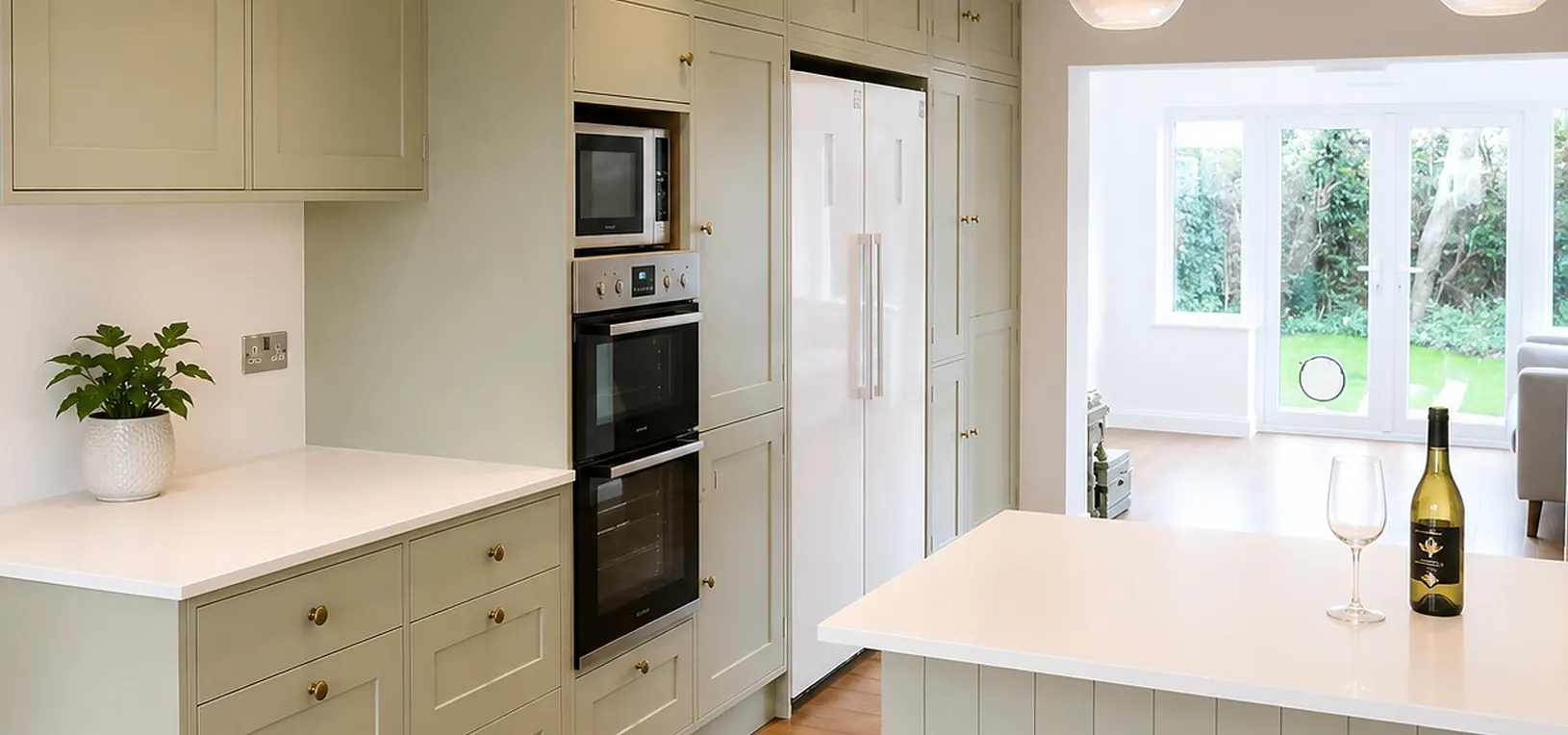
Shaker
Five separate pieces of solid timber around a flat panel. No routed MDF pretending to be a frame, no applied moulding, no shortcuts you only discover when the paint cracks.
Shaker
The shaker door is genuinely brilliant design: two stiles, two rails and a panel, held together with nothing but a mortice, a tenon and the panel floating loose in its groove so it can move with the seasons without splitting the frame. It is roughly three hundred years old and nobody has improved on it.
What is widely sold as shaker today is usually a single sheet of MDF with a rectangle routed into the face. It looks similar in a photograph. It is not the same object. There is no frame, so nothing carries the hinge screws except board; the routed rebate is a weak point along the grain; and the flat sheet is prone to bowing on a tall door.
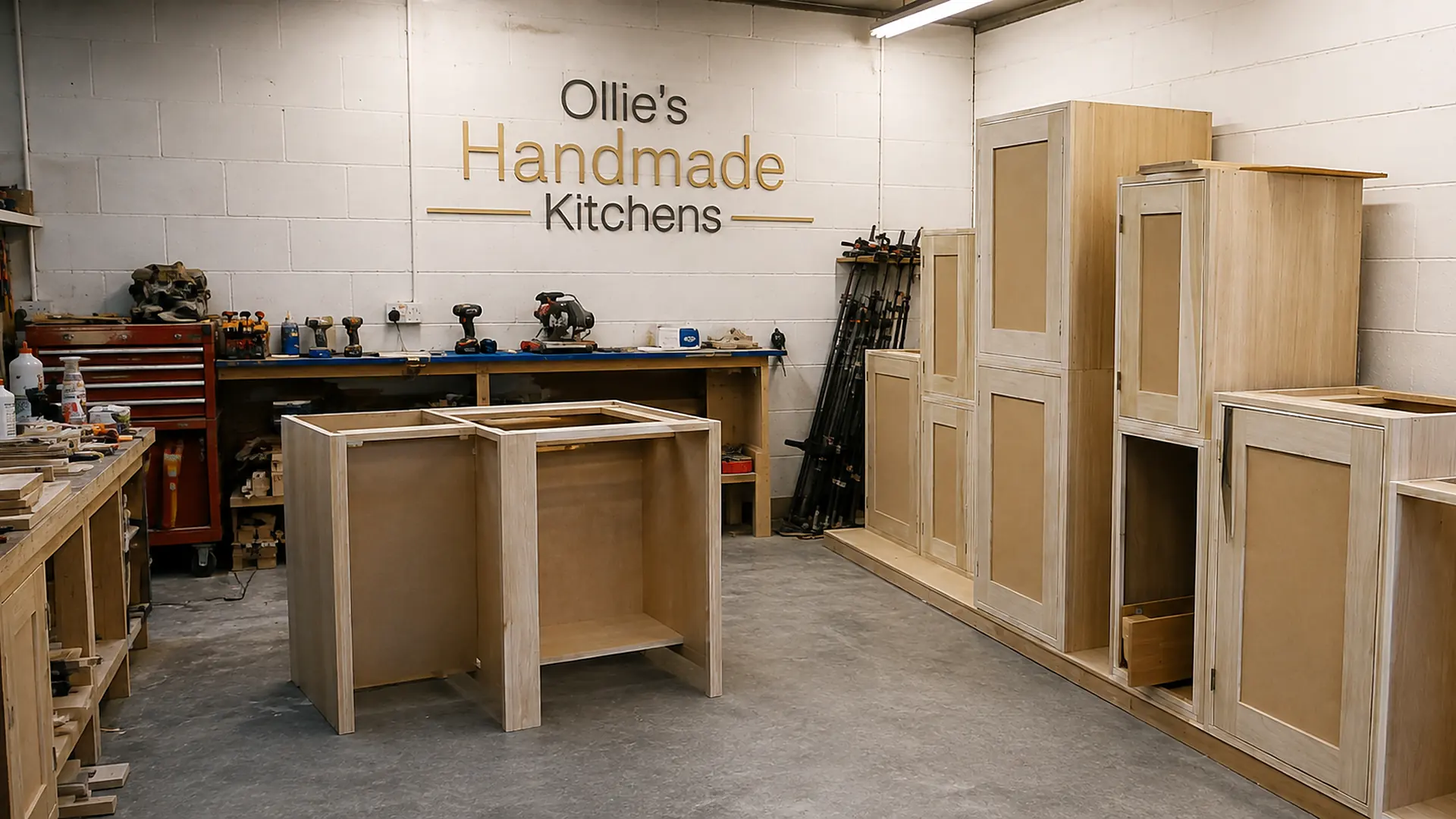
Every shaker door made here is a genuine five-piece: solid American tulipwood stiles and rails, morticed and tenoned, around a moisture-resistant MDF panel — MDF specifically because a painted panel should not shrink and open a pale line around its edge every winter, which solid timber will.
That combination is what the best painted kitchens in Britain use, and it is why the finish still looks flat a decade in.
Detail
The single biggest influence on how a shaker kitchen reads. Narrow stiles look contemporary and light; wide stiles look substantial and rural. Set per project, not per catalogue.
A darker base run with lighter walls is the most reliable way to anchor a room without making it feel heavy. Islands are often given a third colour entirely.
Cup pulls on drawers and knobs on doors is the classic pairing. Bar handles push it modern. Ollie brings physical samples so you can hold them in the room.
Drawer fronts set so their rails line through with the door rails either side. Almost nobody notices when it is right; everybody feels it when it is wrong.
A flat panel sitting slightly proud, flush, or set back — each gives a different shadow line and a different amount of visual weight.
Painted frames with an oiled oak island top, or oak drawer interiors behind painted fronts. Contrast, without the whole room going brown.
Worth knowing
Four things to look for on any door sample, from anybody.
A five-piece door has a visible joint line where each rail meets each stile. A routed MDF door has a continuous, seamless corner — because it is one piece of board.
A real frame-and-panel door shows the panel sitting in a groove, usually with a slight gap so it can move. A routed door is flat all over.
Solid tulipwood frames make a door noticeably heavier and stiffer than a sheet of MDF of the same size. Tall doors in particular feel completely different.
A painted five-piece door can be rubbed down and repainted. A routed MDF door can too, until the routed edge chips — and a foil-wrapped one cannot be repaired at all.
Straight answers
Yes, somewhat — there is real machining time in cutting, morticing and cramping five components rather than routing one. On a full kitchen the difference is usually a modest percentage of the total, and it is the part of the kitchen you touch every day.
Muted, slightly complex colours hold up best over time: sage and olive greens, deep blue-greys, warm off-whites, mushroom and clay tones. Very saturated colours can be wonderful but date faster. Two-tone — a darker base run with lighter walls — is the most reliably good-looking scheme in an average British room.
Very well, with narrower stiles, a flush panel, bar handles and a plain worktop. It reads as calm and simple rather than rustic. Small London flats in particular suit it because the frame gives the doors some texture without any fuss.
Yes — five-piece shaker doors set inside a face frame rather than over the front. It is the more expensive and more traditional version. See in-frame kitchens for how that construction works.
Next step
Book a free, no-obligation design visit. Ollie measures up, talks through what you want and follows up with a drawing and a fixed written quote — usually within a week.