True handleless
A continuous aluminium rail behind the door top, or a routed J-pull in the door itself. Both are designed in from the start rather than added afterwards.

Modern
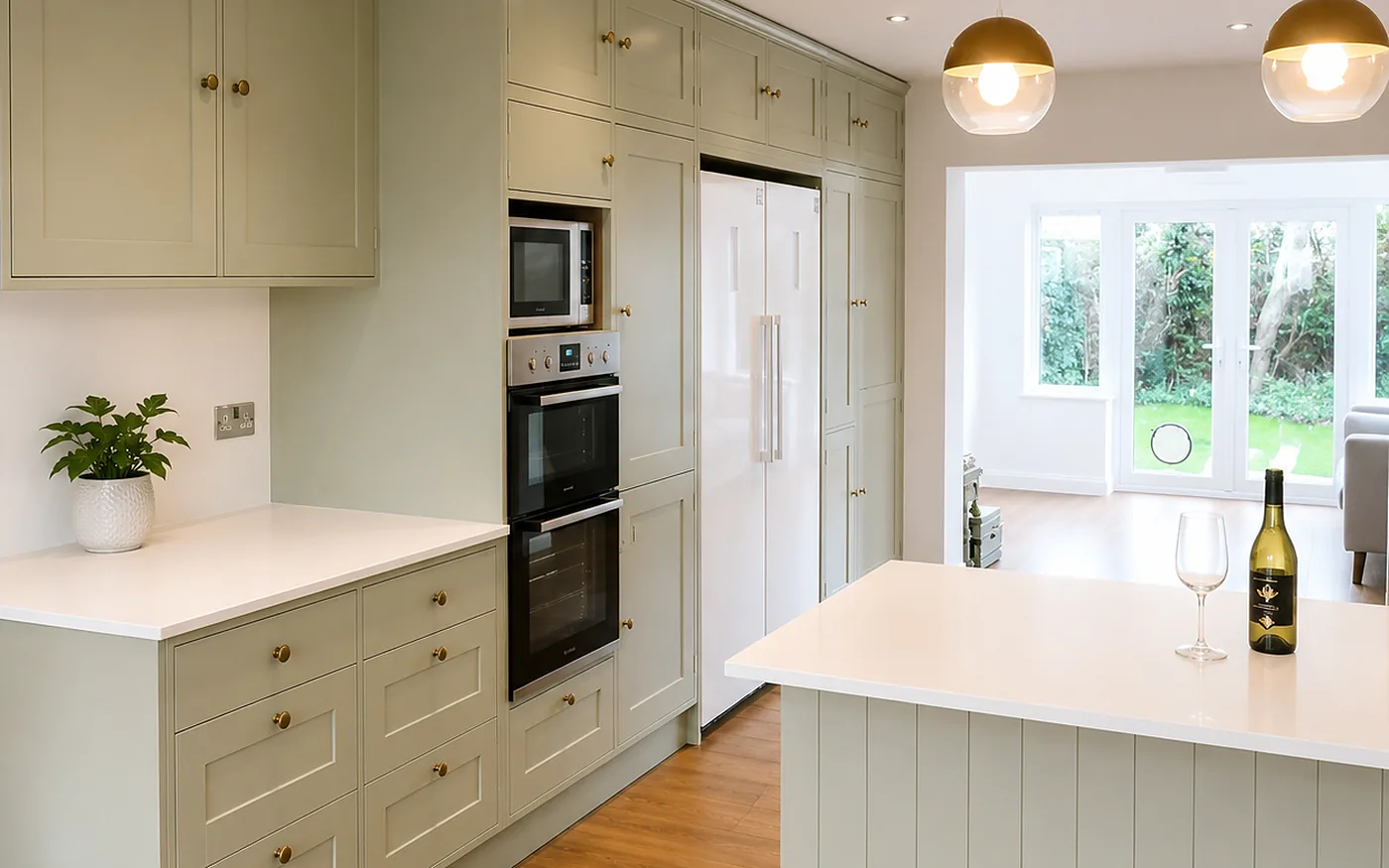
Flat fronts, handleless rails and long uninterrupted runs — built on dovetailed drawers and biscuit-jointed carcasses rather than cam locks and staples.
Modern
A traditional kitchen has beads, cornices and shadow gaps that absorb small inaccuracies. A modern one has nothing to hide behind. When a run of flat slab doors sits in a line under a continuous worktop, every gap has to be identical and every front has to be dead flat, because the eye reads the whole run at once.
That is a joinery problem more than a design one. It is solved with rigid carcasses that stay square, doors with a stable core, hinges that adjust in three planes, and someone on site prepared to spend an afternoon setting gaps rather than an hour.
The other thing minimal kitchens need is warmth, or they end up feeling like a showroom. The usual answer here is timber somewhere honest — an oiled oak worktop on the island, oak drawer interiors behind painted fronts, or a run of open oak shelving breaking up a wall of tall units. It costs very little and changes the whole temperature of the room.
Detail
A continuous aluminium rail behind the door top, or a routed J-pull in the door itself. Both are designed in from the start rather than added afterwards.
Cabinet widths set so door gaps fall where you want them, not where a standard 600mm module lands. Tall banks read as one wall, not seven boxes.
Fridges, dishwashers, bins and boilers behind matching fronts, with clearances designed around the exact appliance models you have chosen.
Where a flawless even sheen matters, doors are sprayed rather than brushed. Matt, eggshell or satin, in any colour.
An oiled oak island top, open shelving, or oak drawer interiors — enough timber to warm the room without turning it rustic.
Under-cabinet and plinth lighting routed into the joinery with cable runs planned in advance, so there are no surface-mounted strips or trailing wires.
Worth knowing
And what is done here to avoid them.
Nothing kills a handleless run faster. Solved with rigid carcasses, three-way adjustable hinges and time spent on site — Ollie sets gaps as the last job, not the first.
Tall slab doors made from a poor core will move. Moisture-resistant MDF with a properly balanced finish on both faces stays flat.
High-gloss looks superb for a fortnight. Matt and satin finishes wear far better in a real kitchen, and edges are sealed so they do not swell where hands land.
White boxes, white worktop, white walls. A single oiled oak surface or a run of open shelving fixes it, and costs almost nothing in the context of the whole project.
Straight answers
Yes, in both common forms: a continuous rail set behind the top edge of the doors, which gives the cleanest possible face, or a J-pull profile routed into the door itself, which is slightly less expensive and easier to clean. Ollie will show you both and explain which suits your door heights.
Different rather than better. Spraying gives a finer, more even sheen and is usually the right choice on flat slab doors where nothing distracts the eye. Hand-brushing gives more depth and can be touched in years later without respraying a whole door. Traditional kitchens almost always want brushed; modern ones often want sprayed.
It did fifteen years ago. Most contemporary kitchens now use matt or satin — they hide fingerprints, scatter light rather than reflecting the room back at you, and have aged much better. Gloss is still available if that is the look you want.
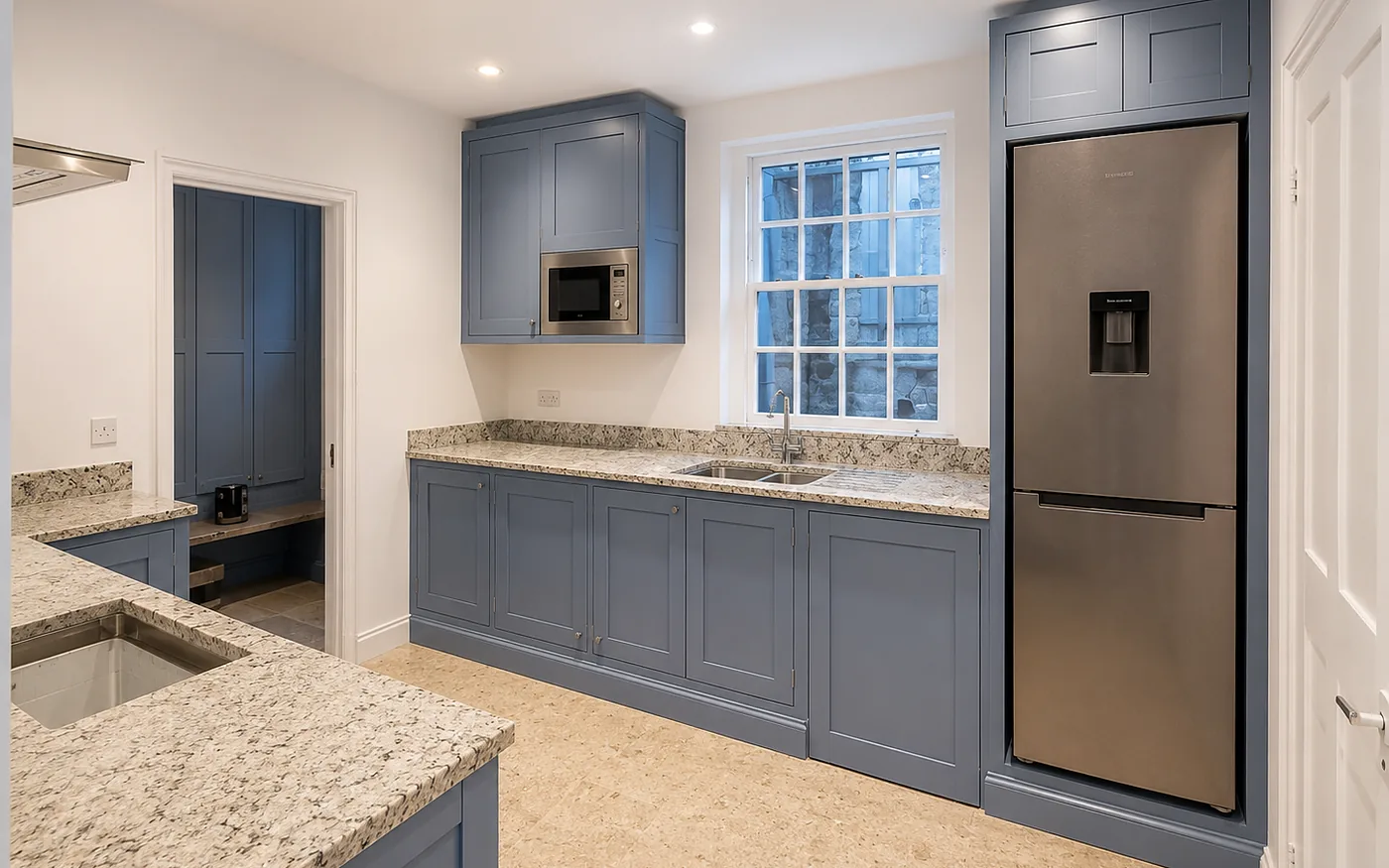
It works well when the contrast is deliberate rather than accidental. A plain handleless run in a Victorian rear extension, with the original room left alone, tends to look considered. Problems come from half-measures — a modern kitchen with a bit of cornice added to soften it. Pick a direction and commit.
Next step
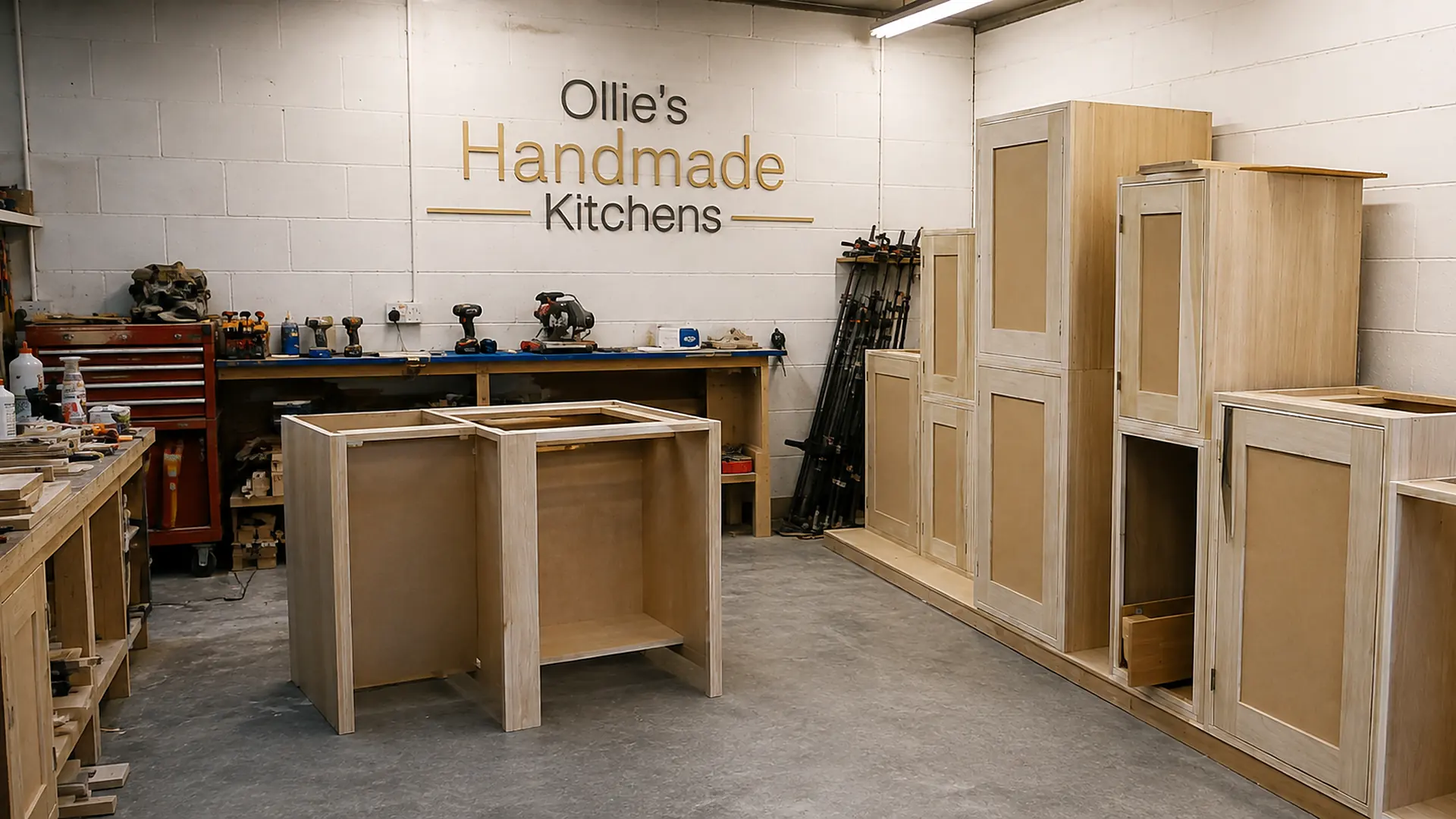
Book a free, no-obligation design visit. Ollie measures up, talks through what you want and follows up with a drawing and a fixed written quote — usually within a week.