
Est. Worthing, West Sussex
Thirty-five years of timber, sawdust and second thoughts about flat-pack
Ollie Feeley has been a carpenter since he was seventeen. These days he makes one thing, properly: kitchens that are hand cut, hand assembled and hand-painted in your home.
Ollie's story
Seventeen, a bench, and a very sharp chisel
I started in carpentry at seventeen. My first proper job was building bespoke furniture — one-off pieces, made to a drawing, made to fit. It is a hard way to learn because there is nowhere to hide. If a mitre is out by half a degree, everybody can see it.
I stayed four years. Then, at twenty-one, I wanted a change and moved onto site carpentry, working for householders across West Sussex and London. That is where the real education happened: second fix, staircases, doors, sash windows, roofs, and kitchens. Hundreds of kitchens.
They were all supplied by somebody else. Flat-pack carcasses out of a lorry, hinges already drilled, drawer boxes stapled together in a factory two thousand miles away. I would spend a week making them look good in somebody's home, and every single time I thought the same thing: I could do better than this.
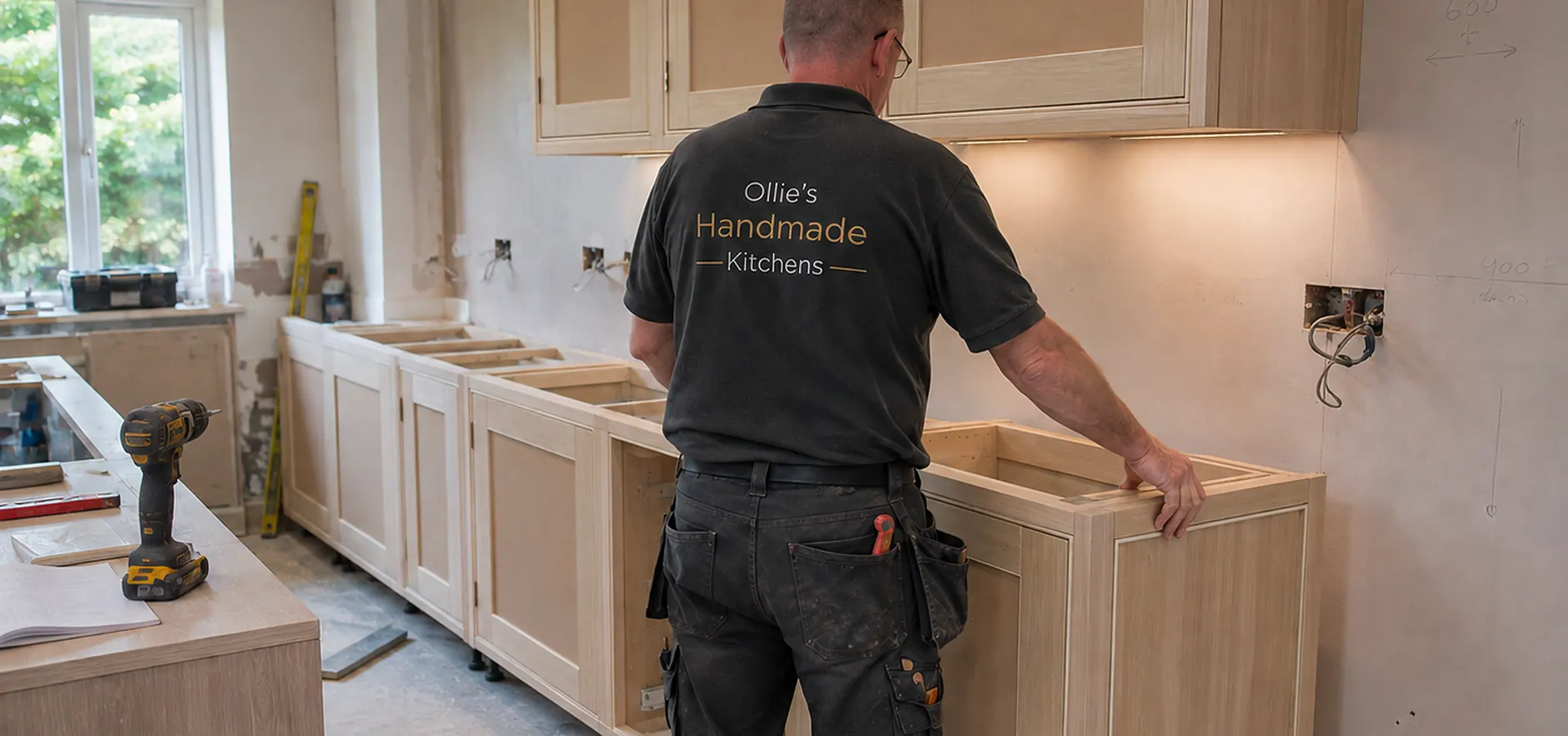
Eventually I got tired of thinking it. Ollie's Handmade Kitchens is the answer to that thought — kitchens I build myself, from board and timber, to a standard I am prepared to put my name on.
What I actually care about
Two things, mostly. The first is that a kitchen should outlast the fashion it was built in. That means proper joints, proper timber and a finish that can be repainted in fifteen years rather than replaced. Dovetails on every drawer. Biscuit-jointed carcasses. Interiors sealed against the inevitable leak.
The second is that quality should not require a London showroom budget. I have spent years finding suppliers who will give me the best material at a sensible price, because I firmly believe that having the kitchen of your dreams should not break the bank. I have no showroom, no sales team and no commission to pay anybody — so what you pay for is timber, hardware and my time.
How I work now
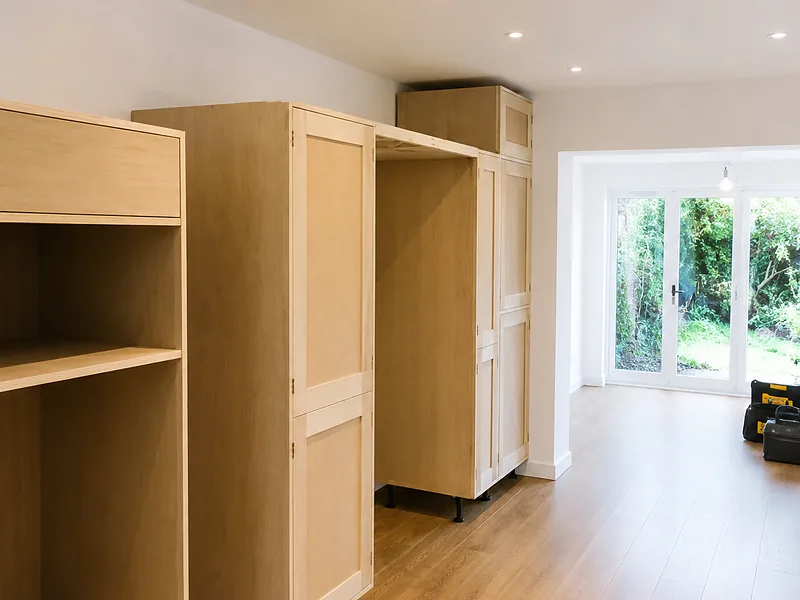
One kitchen at a time. I do the design visit, I take the measurements, I make the cabinets, I fit them, and I hand-paint them in your house afterwards. If something goes wrong you ring me, not a call centre. That is the whole business model and I have no intention of changing it.
Through dovetail · cut by hand, every drawer
Why it lasts
You can't see the joints.
That's rather the point.
Almost every kitchen sold in Britain is a stack of machine-drilled boxes held together with cam locks and glue blocks. It works. For about eight years. Then the drawer boxes sag, the cam locks chew out their sockets and the doors start to drop.
This is not that. Here is what actually holds an Ollie's kitchen together.
- 01
Dovetailed drawer boxes
Interlocking tails and pins mean a drawer cannot pull itself apart, no matter what you load into it. Glue is a belt; the joint is the braces.
- 02
Biscuit-jointed carcasses
Compressed beech biscuits swell into precisely routed slots, pulling each panel square and locking it there. Rigid, silent, invisible.
- 03
Solid timber face frames
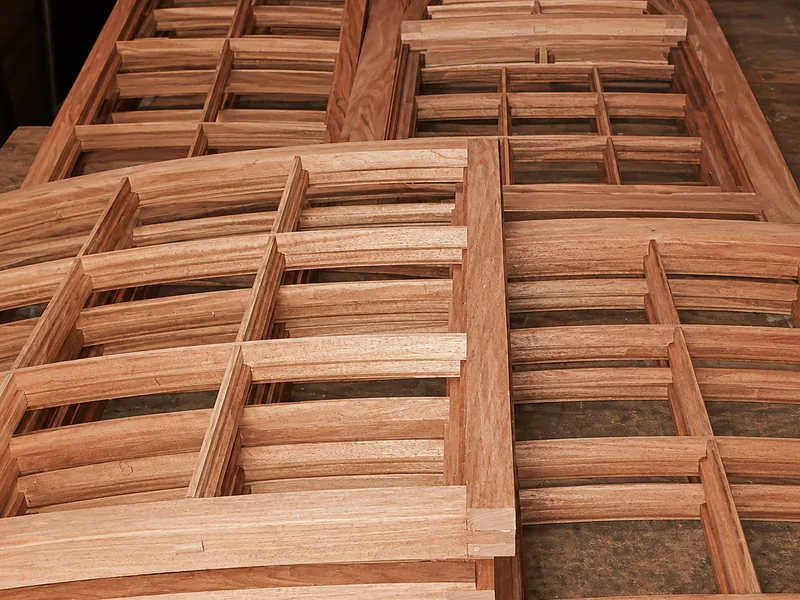
Tulipwood or oak frames take the knocks, carry the hinges and give a hand-painted finish something worth landing on.
- 04
Sealed interiors
Every cabinet interior is sealed with an oil-based sealer, so a leaking dishwasher is an inconvenience rather than a replacement kitchen.
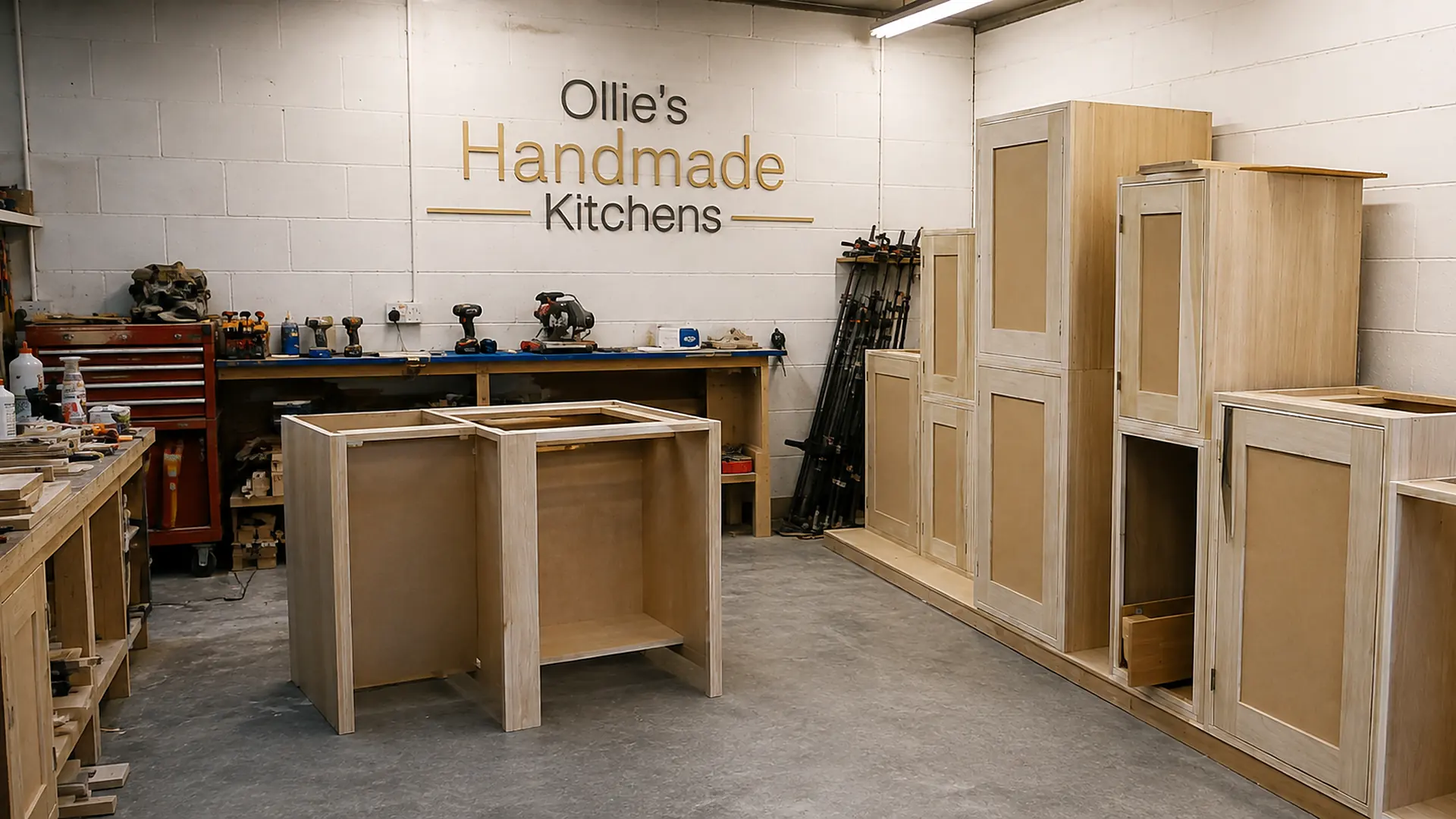
The workshop
Where it happens
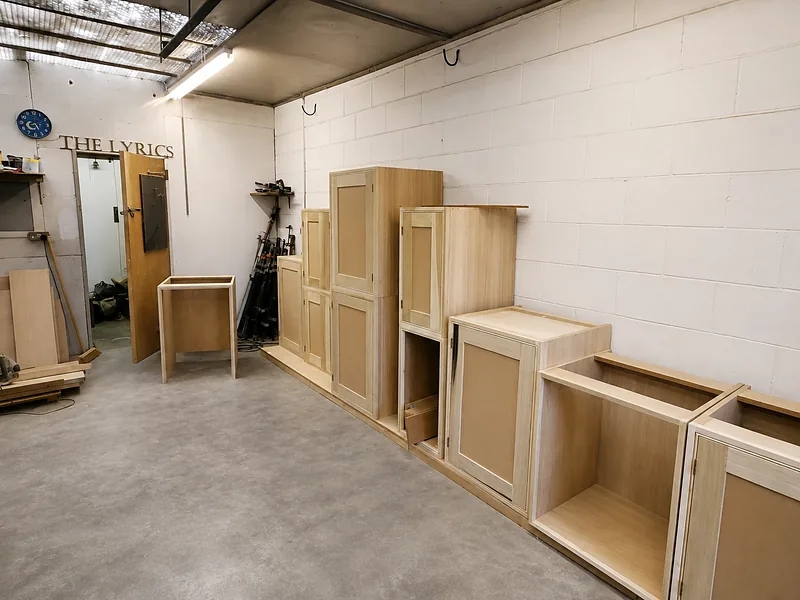
A bench, a table saw, a router table, a spindle moulder and thirty-five years of muscle memory. Nothing here is automated, which is exactly the point.
In their words
“The kitchen Ollie built for me and my wife could not be better. He walked us through the design and even helped us settle on the right handles for the drawers. We honestly could not be happier.”
Homeowner — Worthing, West Sussex
Next step
Come and talk it through
Ollie visits you, not the other way round. Ninety minutes, a tape measure and an honest conversation about what your room can take.